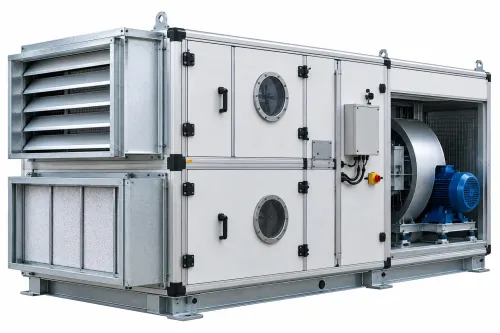
Modern buildings need fresh air, but simply opening an outside-air inlet does not necessarily provide the required indoor conditions. Outdoor air may contain dust, particulate matter, moisture, and temperature variations that need to be addressed before the air enters occupied or process areas. A TFA Treated Fresh Air Unit is designed to introduce fresh outdoor air after appropriate treatment.
For commercial and industrial buildings, TFA selection should be based on occupancy, ventilation requirements, filtration, temperature conditions, and integration with the existing HVAC system.
What Does a TFA Unit Do?
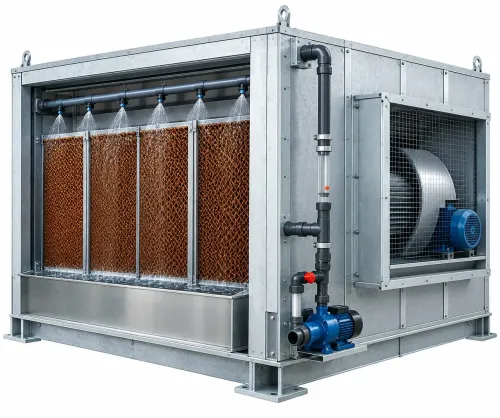
A treated fresh air unit draws outdoor air and passes it through selected treatment stages before supplying it indoors.
Depending on the project, these stages can include:
- Filtration
- Cooling
- Heating
- Dehumidification
- Air movement
- Additional treatment components
Not every installation requires the same configuration. A factory, office building, hospital support area, commercial facility, or institutional property may have substantially different fresh-air requirements.
Why Delhi Conditions Matter
Delhi experiences significant seasonal changes as well as periods when outdoor particulate levels become an important indoor-air consideration.
This means a TFA unit should not be selected only by nominal airflow. Filtration requirements, filter pressure drop, maintenance frequency, ambient temperature, humidity, and desired supply-air conditions also matter.
The National Capital Territory's hot summers and seasonal environmental conditions make appropriate equipment specification especially relevant for buildings with controlled indoor environments.
Five Questions to Answer Before Buying
How much fresh air is required?
Calculate the requirement according to occupancy, building use, ventilation design, and applicable project criteria.
What level of filtration is needed?
Filter selection should reflect outdoor conditions and the sensitivity of the indoor application.
What supply-air condition is expected?
Determine whether air needs only filtration or additional cooling, heating, or moisture treatment.
What static pressure must the fan overcome?
Filters, coils, ducts, dampers, and fittings all add resistance.
How will maintenance be performed?
Filters and internal components should remain accessible for inspection and servicing.
Avoid Oversizing Without Analysis
A larger unit is not automatically a better unit. Oversizing can affect energy consumption, space requirements, noise, and system balancing.
Similarly, undersizing can lead to inadequate fresh-air delivery.
Sys Enterprises manufactures air-handling equipment for commercial and industrial applications. Organizations evaluating a TFA Treated Fresh Air Unit in Delhi can obtain a more appropriate configuration when building use, airflow, pressure, filtration, and treatment requirements are clearly defined.
A well-selected TFA unit is ultimately about delivering the required quantity and quality of outdoor air in a controlled manner that complements the building's broader ventilation and HVAC strategy.
Keywords