Winter heating, summer cooling, monsoon moisture, dust, smoke and pollen can turn a nominal outdoor-air flow into inadequate ventilation, excessive energy use or unstable factory pressure. You will be able to estimate seasonal airflow, coordinate make-up air with exhaust, specify the unit and filters, and compare equipment types against the actual manufacturing duty.
Key takeaways
- Separate outdoor-air supply from dilution, local exhaust, and process capture.
- Calculate airflow from occupants, process loads, exhaust volume, and replacement air.
- Set pressure targets to prevent contaminant migration between factory zones.
- Specify filters, heating, cooling, and controls for seasonal operating conditions.
Map the seasonal problem before selecting a unit
Start by separating four duties: outdoor-air supply for people, general dilution ventilation, local exhaust ventilation and process capture. A fresh air unit cannot replace a hood over a welding station, solvent tank, furnace, paint booth or dust-generating machine. Capture contaminants at the source, then provide replacement air for the exhaust system.
1. Map the winter load. Cold, dense outdoor air increases heating duty, filter loading and fan operating stress, while raising coil-freeze risk. Specify a preheat coil, low-temperature protection and a controlled cold-start sequence; do not open dampers fully against a cold coil.
2. Map summer and monsoon loads separately. Check sensible heat and latent moisture: a dry-bulb target does not prove humidity control. During monsoon conditions, verify coil leaving-air dew point, condensate drainage and dehumidification capacity.
3. Map outdoor contamination. Place intakes away from roof exhaust, cooling towers, loading docks, vehicle traffic and contaminated process discharge. Size filtration for dust, smoke and pollen, then inspect pressure drop as filters load.
4. Test energy-recovery assumptions. Free cooling works only when outdoor temperature and enthalpy are favourable. Sticky, corrosive or hazardous exhaust can foul a recovery wheel or transfer contaminants across a heat exchanger.
This map is essential when comparing fresh air units for seasonal ventilation problems: the unit must condition replacement air without being asked to perform source capture. Its airflow, heating, cooling, humidity and filtration duties must follow the factory’s process schedule, exhaust pattern and outdoor conditions.
Calculate seasonal airflow from people, process and exhaust
Do not let one air-changes-per-hour figure determine fresh air unit seasonal airflow. Start with the largest applicable requirement: people-related outdoor air, process dilution, required exhaust replacement or a pressure-balance target.
1. Calculate room-volume airflow as a preliminary comparison: Q = room volume × target air changes per hour. A 30 m × 20 m × 6 m factory contains 3,600 m³; at 6 ACH, Q is 21,600 m³/h, or about 12,700 CFM. Do not treat that result as the final selection.
2. Total the exhaust that requires replacement air. Three roof fans removing 8,000 m³/h each plus a dust collector removing 6,000 m³/h create 30,000 m³/h of exhaust. Add required process or occupancy airflow, then subtract only replacement air verified from another system.
The unit may therefore need close to 30,000 m³/h before pressure-control allowances, not 21,600 m³/h.
3. Check infiltration separately. Door leakage, open dock doors and building leakage can supply uncontrolled air, cause drafts and pull the factory negative. That air does not count as dependable make-up air.
4. Check mass flow as well as volume flow because cold outdoor air is denser. For fresh air units for factories, require fan curves at the design duty point and external static pressure, with clean and dirty filter conditions.
Check winter heater capacity at design outdoor temperature and discharge temperature, then check summer coil capacity for sensible and latent loads.
Set the ventilation requirements around pressure and air quality
Write the fresh air unit ventilation requirements as operating cases, not one nameplate airflow. State outdoor-air quantity in m³/h or CFM for minimum, normal and maximum production, and identify whether each duty serves people, exhaust make-up, dilution or a pressure-control loop.
1. Specify external static pressure at the duty point, including louvers, dampers, ducts, silencers, filters, coils and terminals. Set duct velocity limits to control noise, erosion and pressure loss; require fan curves at clean and dirty filter conditions.
2. Mark intake and discharge locations on the layout. Keep intakes away from process-exhaust re-entrainment, rain, cooling towers, vehicles and loading docks, or the unit can deliver contaminated air while meeting its airflow setpoint.
3. Interlock or track make-up air with roof fans, cabinet exhaust blowers, axial fans, welding exhaust, paint booths, ovens and dust collectors. Too little air causes door suction, cold drafts, uncontrolled infiltration, combustion-air interference and poor hood capture; too much pushes fumes into offices or adjacent work areas.
4. State discharge-temperature control for winter preheating, summer cooling and monsoon dehumidification, plus condensate drainage and frost protection. Specify filter stages, pressure-drop alarms, dirty-filter replacement criteria and safe replacement clearance.
Commission the unit during minimum and maximum exhaust, occupied and unoccupied operation, with representative door and damper positions. Measure airflow, room pressure, temperature and humidity. ASHRAE Standard 62.1 informs people-related outdoor air, not process control for fumes, vapours, dust, heat or moisture.
Build controls and filtration for changing factory conditions
1. Program fresh air unit seasonal airflow as a control sequence, not fixed summer and winter fan speeds. Track exhaust airflow where make-up air is required, hold the minimum outdoor-air limit, and modulate toward the building-pressure setpoint.
During a cold start, reduce outdoor air only when process and code minimums remain satisfied; increase it as exhaust and occupancy rise.
2. Reset supply-air temperature to prevent winter overheating and unnecessary summer cooling. Enable economiser or free-cooling operation when outdoor enthalpy is below return-air enthalpy and indoor moisture remains acceptable. Include low-limit sensing, water-circulation proof, valve and pump failure responses, preheat or mixing control, and safe shutdown for water coils.
3. Protect condensate trays and drains against overflow and freezing. Your fresh air unit ventilation requirements should also specify how dampers, heating valves and pumps respond to alarms; a low-limit thermostat alone cannot prevent a frozen coil.
4. Select filtration by contaminant and efficiency. Use a prefilter to arrest larger dust and protect the final filter, then specify the final particle filter using ASHRAE Standard 52.2 reporting and the selected MERV level. Record clean and loaded pressure drop because dust reduces delivered airflow and increases fan power.
Particle filters do not remove gases, solvent vapours or odours; use a contaminant-specific gas-phase medium for those duties.
5. After commissioning, record airflow, pressure, temperature, humidity and filter-drop readings during actual production, minimum and maximum exhaust, and occupied and unoccupied modes. Include representative door and damper positions; a balanced test with process exhaust off can conceal inadequate make-up air.
Compare equipment by duty, then specify the right factory arrangement
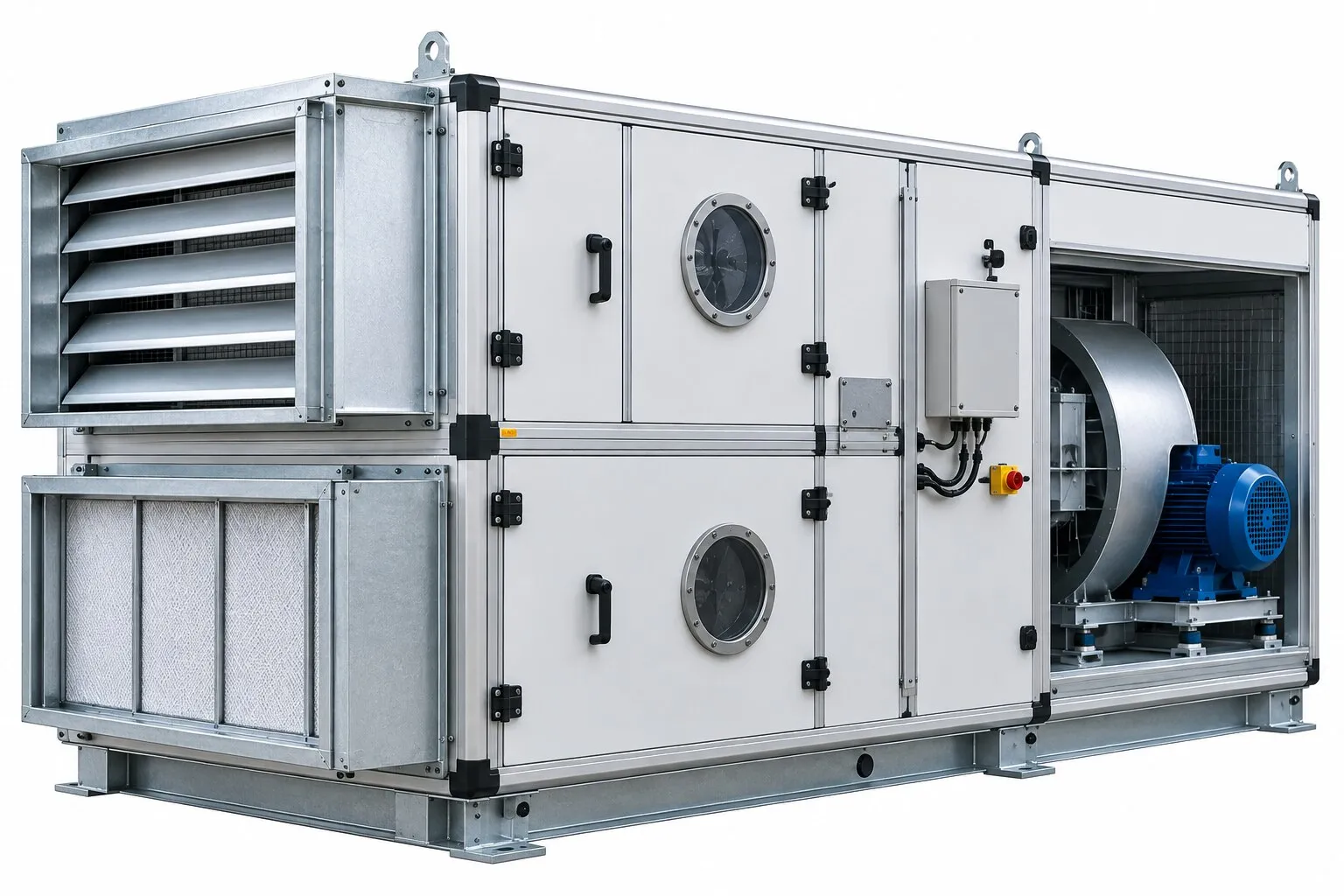
For most factories, choose a dedicated outdoor-air or make-up-air unit when seasonal heating, cooling, humidity control and building-pressure tracking matter. It conditions outside air and coordinates supply with exhaust; an inline fan or louvre-and-fan arrangement cannot perform that sequence.
| Option | Strength | Limitation |
|---|---|---|
| Dedicated outdoor-air or make-up-air unit | Conditions outside air and tracks exhaust or pressure | Higher controls, coil and filtration requirements |
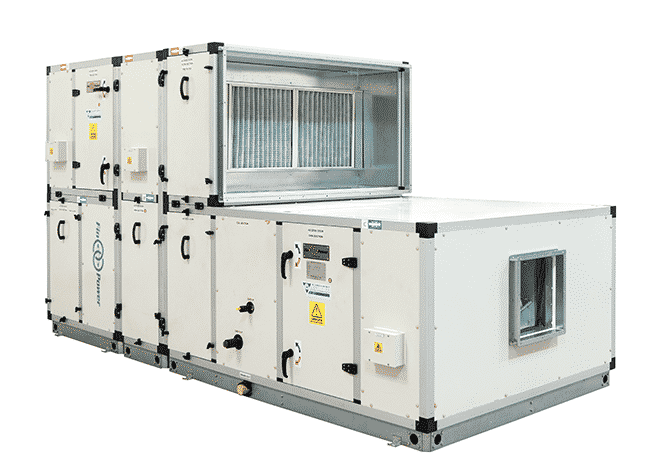
| AHU | Handles outdoor and recirculated air | Recirculation needs a contaminant review and separate process capture |
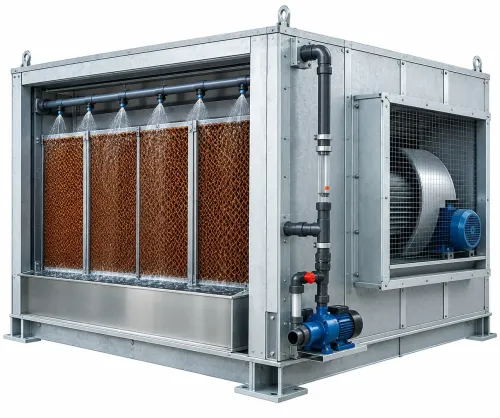
| Air washer | Adds cooling or humidification and removes selected particulates | Requires water treatment, drift control, maintenance and humidity limits |
| Inline fan | Boosts a duct or performs simple exhaust | No filtration, heating, cooling, dehumidification or pressure sequence |
| Louvre and fan | Low first cost | Leaves temperature, moisture, rain, dust and pressure largely unresolved |
| Heat recovery | Reduces conditioning load | Check leakage, carryover, fouling, corrosion, cleanability and bypass needs |
Specify fresh air units for factories by duty, not nameplate airflow. Your fresh air unit ventilation requirements should include performance at the specified m³/h or CFM and external static pressure, motor input, coil duty, filter pressure drop at clean and dirty conditions, controls narrative, intake layout, maintenance access and test procedures.
Sys Enterprises is worth comparing at this stage when its airflow equipment is assessed against exhaust, filtration, pressure and seasonal-control duties. Select the arrangement that remains stable at minimum and maximum production, not the one with the largest nominal fan rating.
Related products
 | Sys Enterprises offers reliable and energy-efficient Fresh Air Units (FAUs) designed to supply clean, filtered outside air into enclosed spaces. View product → |
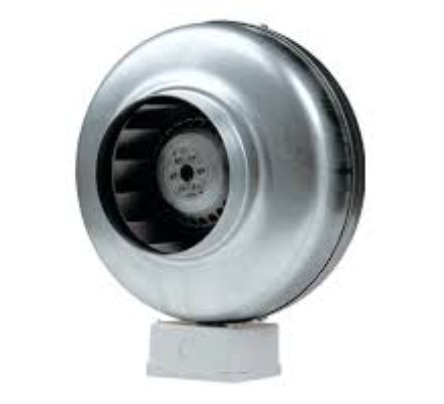 | Inline Fans Sys Enterprises offers compact and efficient Inline Fans designed for duct-mounted ventilation in commercial and industrial settings. View product → |
Frequently asked questions
How do you map a seasonal ventilation problem before selecting a fresh air unit?
Separate outdoor-air supply, general dilution ventilation, local exhaust ventilation, and process capture. A fresh air unit cannot replace source capture over welding, solvent, furnace, paint, or dust-generating operations.
How do you calculate seasonal airflow for a factory?
Calculate airflow from occupant outdoor-air needs, process emissions, heat loads, and exhaust volume. Include the replacement air required to offset local exhaust systems.
What ventilation requirements should you set for pressure and air quality?
Define pressure relationships between production areas, clean zones, storage rooms, and exhaust spaces. Set air-quality targets around the contaminants and processes present.
What should you compare when choosing fresh air units for factories?
Compare units by airflow duty, filtration, heating and cooling capacity, controls, operating conditions, and the factory arrangement they must serve.
Related products
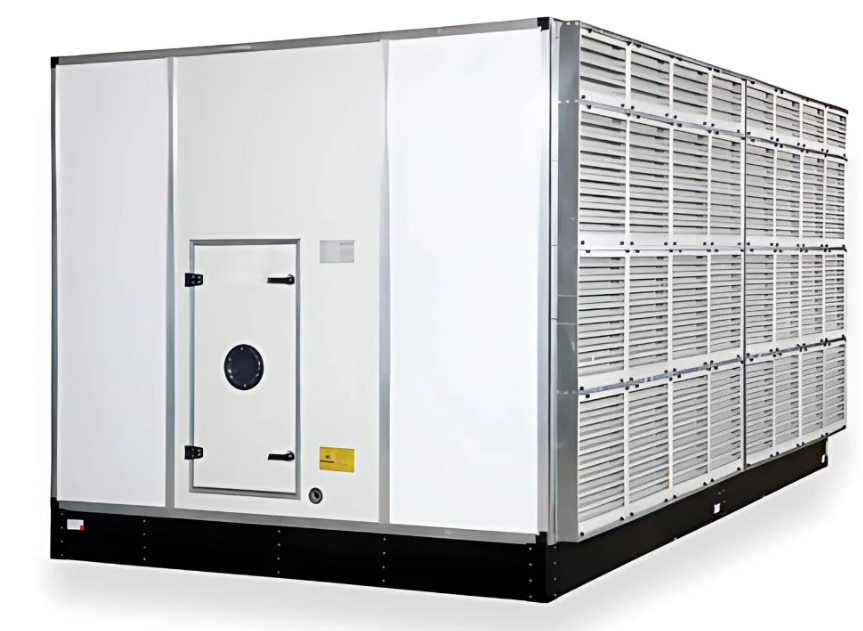 | Sys Enterprises offers advanced Airwashers designed to improve indoor air quality by simultaneously filtering, humidifying, and cooling air. View product → |
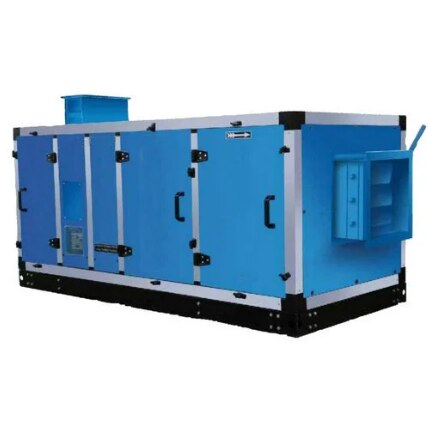 | AHU Sys Enterprises designs and manufactures high-efficiency Air Handling Units (AHUs) tailored for industrial and commercial HVAC applications. |
Keywords