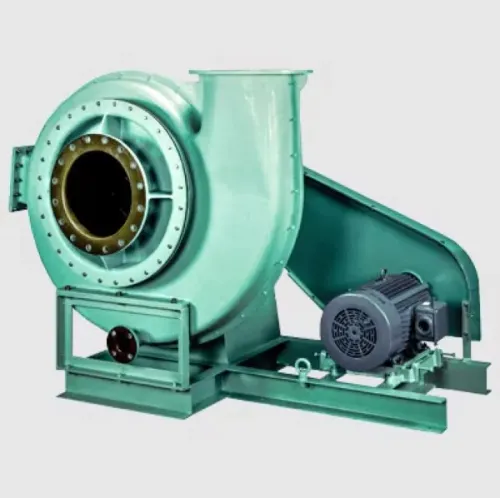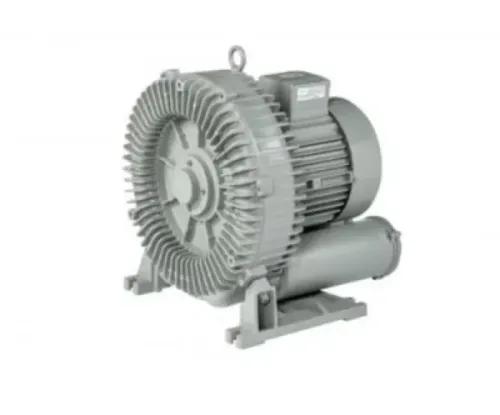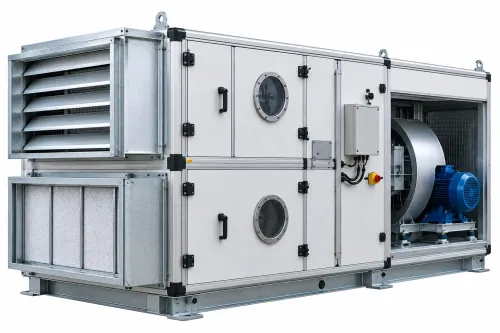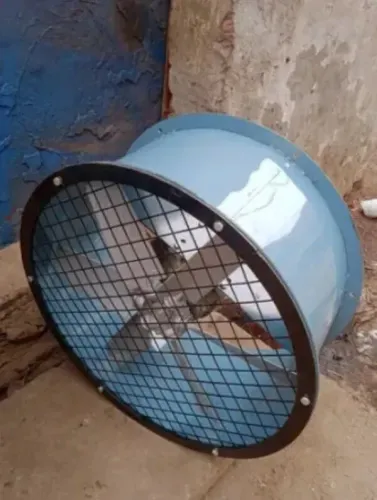
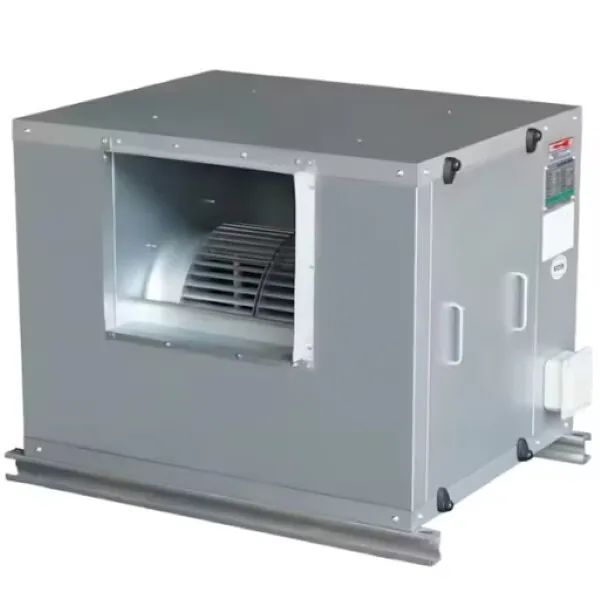
A cabinet exhaust blower cannot be selected safely from cabinet dimensions or a maximum-CFM figure alone. Before requesting a quotation, define the cabinet’s purpose, calculate the airflow and pressure duty, document the exhaust hazards, and plan how replacement air and discharge will work. By the end, you will have an order-ready information set and a way to check the installation after delivery.
Key takeaways
- Define whether the blower removes heat, contaminants, humidity, or cabinet pressure.
- Calculate airflow from heat load, contaminant capture, or required air changes.
- Specify airflow, static pressure, temperature, materials, motor, controls, and certification.
- Verify rotation, vibration, airflow, pressure, wiring, and documentation before acceptance.
What must the blower remove from the cabinet?
Choose the design basis before choosing the blower: heat removal, contaminant capture, humidity control, or pressure control. Each produces a different airflow requirement.
| Design basis | What sets airflow | What goes wrong with the wrong basis |
|---|---|---|
| Heat removal | Watts and allowable temperature rise | Components overheat even with high air changes |
| Contaminant capture | Release rate, enclosure leakage, and capture velocity | Vapour or dust escapes into the work area |
| Humidity control | Moisture load and target relative humidity | Condensation, corrosion, or product damage develops |
| Pressure control | Target pressure or inward-leakage criterion | Leakage becomes uncontrolled |
For heat-only enclosures, calculate a first-pass requirement as CFM = 3.412 × heat load in watts ÷ (1.08 × allowable air-temperature rise in °F). Include heat from components, lights, motors, heaters, and cabinet walls. This estimate excludes filter fouling, duct losses, recirculation, solar loading, and other system effects.
Before ordering, record these cabinet exhaust blower requirements:
- Internal length, width, and height; contaminant type and release rate; target air-change rate; operating hours; ambient temperature; altitude; humidity; and available voltage, phase, and frequency.
- A fully enclosed process cabinet may need controlled inward leakage rather than high airflow.
- An open-front or partially enclosed source needs a defined face or capture velocity based on the release point.
- A generic cabinet-volume air-change rule cannot replace contaminant-release and capture assessment.
For pressure control, state the target pressure, measurement location, normal and worst-case door or opening condition, and whether the blower runs continuously or follows a process interlock.
How do you calculate the blower duty point?
The duty point is the required airflow in m³/h or CFM at a stated external static pressure in Pa or mmWG—not the blower’s free-air rating. Select the fan where its curve meets that airflow after the complete system resistance is included.
Build the pressure budget from every resistance between the cabinet and discharge:
- Cabinet openings and inlet grilles
- Filters and dampers
- Flexible connectors, silencers, straight duct, elbows, and transitions
- Discharge fittings and downstream pollution-control equipment
Record filter data separately:
- Filter type, face area, and airflow rating
- Clean pressure drop and replacement pressure drop
- Loading characteristics over the expected service interval
A differential-pressure switch or dirty-filter alarm can expose rising resistance before airflow falls; simply oversizing the blower does not replace monitoring.
Correct the selection for actual air conditions. Hot air is less dense, altitude changes fan and motor performance, and humidity, vapor, and dust loading affect density, materials, and resistance.
State the target cabinet pressure or inward-leakage criterion, measurement location, normal and worst-case door position, and whether the fan runs continuously or follows a process interlock. These details belong in the cabinet exhaust blower specifications.
Make the fan curve the comparison document: mark the system operating point, allowable operating range, and minimum stable operating condition. A supplier cannot select reliably from cabinet volume or maximum CFM alone.
Which specifications belong on the purchase document?
Request a complete cabinet exhaust blower specifications sheet, not a free-air CFM number. State motor power, voltage, phase, frequency, rated current, speed, efficiency, service factor, sound level, enclosure rating, impeller material, bearing arrangement, control method, fan curve, and minimum stable operating point.
Specify the required accessories and signals:
- Variable-frequency drive, damper, or starter
- Airflow switch, pressure sensor, or fan-failure alarm
- Service disconnect and process interlock
- Allowable operating range shown on the fan curve
A variable-frequency drive provides balancing and turndown; it does not correct an undersized duct, blocked filter, wrong motor selection, or unstable fan operation.
Identify vapor, gas, mist, combustible dust, hot particles, and fire risk before selecting electrical equipment, fan construction, or routing. NFPA 91 addresses exhaust systems handling vapor, gas, mist, and particulate solids. NFPA 652 provides the general framework for combustible-dust hazard analysis.
Match construction to concentration, temperature, particle loading, and chemical compatibility. Use this comparison when describing the stream:
| Material | Suitable concern | Specify when |
|---|---|---|
| Coated steel | Corrosion protection | Chemical exposure is defined and coating compatibility is confirmed |
| Stainless steel | Corrosion and moisture resistance | The stream or washdown requires metal durability |
| FRP or plastic | Chemical resistance | Vapors or liquids attack metals |
| Non-sparking construction | Ignition-risk reduction | Combustible dust, flammable vapor, or hot particles require a documented basis |
Also state whether special seals, abrasive-duty components, or temperature-rated materials are needed.
How should the exhaust, replacement air, and discharge be installed?
Calculated airflow exists only when replacement air can enter the cabinet or room. A negative-pressure space needs a deliberate make-up-air path sized for the exhaust and located away from the exhaust opening; otherwise air short-circuits, doors bind, combustion appliances are disturbed, contaminants leak through unintended gaps, and fan flow falls.
1. Provide mounting clearance for the fan, inlet and discharge orientation, flexible connectors, vibration-isolation mounts, rotating-part guards, and a service disconnect. Reserve access for belts, bearings, fan inspection, filter replacement, and differential-pressure or airflow instruments.
2. Add cleanout access where dust can settle and drains where condensation can collect. Protect outdoor equipment from weather, and specify fan-failure or inadequate-exhaust alarms so protection does not end after commissioning.
3. Route the discharge so it cannot return to the intake or enter doors, windows, roof equipment, outdoor-air intakes, or occupied areas. Check required separation, permitted discharge height or stack arrangement, and whether filtration, scrubbing, or another treatment is required before release.
4. State sound limits, fan speed, balancing grade or vibration limit, isolation requirements, and silencer requirements before ordering. A silencer added later increases system resistance and can move the operating point below the required airflow.
Confirm that the complete installation, including filters, dampers, ductwork, discharge fittings, and treatment equipment, meets the required airflow at external static pressure. Do not approve a layout that relies on room leakage as its make-up-air path.
What should you verify before accepting the blower?
Do not accept a blower from cabinet size alone. Convert the design into an order and acceptance test with a numbered industrial cabinet exhaust checklist:
1. Confirm the duty point as airflow in m³/h or CFM at the complete-system static pressure in Pa or mmWG. Attach the fan curve, system operating point, motor power, speed, rated current, control method, allowable operating range, and minimum stable operating condition. Include actual air temperature, altitude, humidity, and contaminant loading.
2. Identify the filter type, face area, airflow rating, clean pressure drop, replacement pressure drop, and loading characteristics. Specify a differential-pressure switch or dirty-filter alarm when rising resistance could reduce protection.
3. State the materials and hazard basis, including vapor, gas, mist, combustible dust, corrosive chemicals, moisture, abrasive particles, temperature, or fire risk. Show duct routing, discharge separation, make-up-air path, mounting clearances, drains, guards, cleanout and filter-access space, service disconnect, controls, interlocks, and alarms.
4. Define the target cabinet pressure or inward-leakage condition, measurement location, normal and worst-case door position, and required fan operating schedule. Write acceptance values for measured airflow, static pressure, cabinet pressure, filter pressure drop, motor current, rotation, interlocks, alarms, sound, vibration, and discharge behavior.
Sys Enterprises becomes useful at this point because the supplier can match a blower configuration to documented duty data rather than guess from cabinet dimensions.
The cabinet exhaust blower buying guide decision rule is simple: do not approve the selection until the supplier’s curve intersects the required airflow at full system resistance, and the planned make-up air and discharge have been checked on site.
Related product
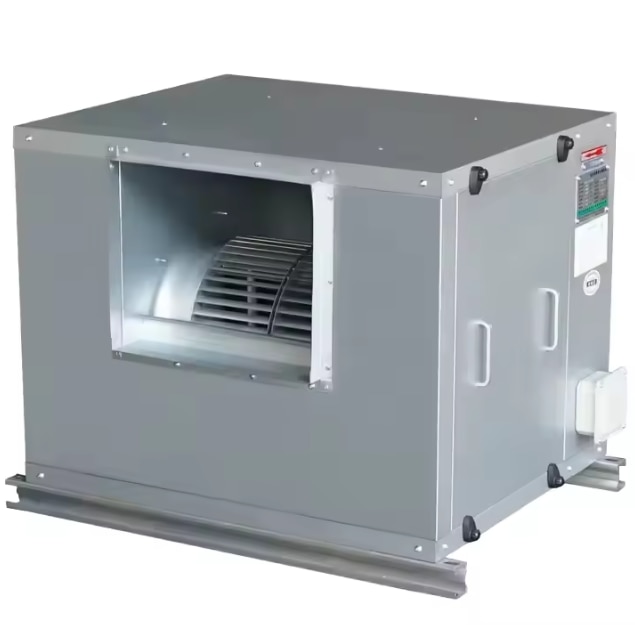 | Cabinet Exhaust Blower Sys Enterprises manufactures durable and efficient Cabinet Exhaust Blowers designed to provide effective ventilation and exhaust solutions for... View product → |
Frequently asked questions
What must a cabinet exhaust blower remove from the cabinet?
Define the design basis first: heat removal, contaminant capture, humidity control, or pressure control. The basis determines airflow, filtration, materials, and controls.
How do you calculate the blower duty point?
Calculate the required airflow, then add the pressure losses from grilles, filters, dampers, ducting, bends, and discharge fittings. Select the blower at that airflow and total static pressure.
Which specifications belong on the purchase document?
State airflow, static pressure, air temperature, contaminant details, blower construction, motor rating, power supply, controls, sound limits, test documents, and required standards.
How should the exhaust, replacement air, and discharge be installed?
Provide a low-resistance exhaust path, enough replacement air, accessible filters and dampers, sealed joints, safe discharge clearance, and supports that prevent vibration transfer.
What should you verify before accepting the blower?
Check the nameplate, rotation, airflow, static pressure, vibration, noise, motor current, guards, wiring, accessories, test results, manuals, and spare-parts list against the purchase document.
Keywords