Choosing a blower from its advertised maximum flow or pressure can leave an HVAC system underperforming, noisy, overheated or electrically overloaded. By the end, you will be able to compare blower types, calculate the actual system duty, read a performance curve and request specifications that support a defensible selection.
Key takeaways
- Use ring blowers for modest airflow with relatively high pressure or vacuum.
- Choose centrifugal or axial fans for whole-building supply and return air.
- Calculate airflow, pressure losses, filter loading, and leakage at the duty point.
- Compare motor data, controls, noise, temperature limits, and performance curves.
Which blower principle fits the HVAC duty?
Choose a ring blower only when the HVAC duty needs modest airflow with relatively high pressure or vacuum; whole-building supply and return air usually belong to centrifugal or axial fans.
| Option | Operating principle | Practical consequence |
|---|---|---|
| Side-channel or regenerative blower | The impeller repeatedly accelerates and recirculates air | Compact, oil-free gas path and high pressure or vacuum at modest flow, but slip, heat and aerodynamic losses reduce efficiency |
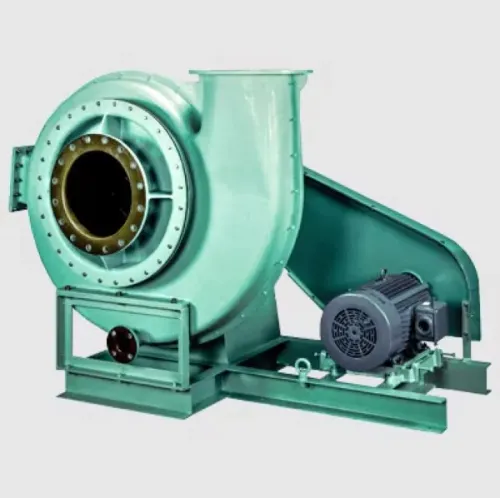
| Centrifugal blower | A radial impeller accelerates air outward | Suits larger air volumes and duct systems, with pressure falling as system resistance rises |
| Positive-displacement blower | Lobes or screws trap a defined volume per revolution | Maintains pressure as resistance changes, but requires relief protection against blocked discharge or excessive vacuum |
A ring blower for HVAC fits burner air, air knives, localized exhaust pickup, duct pressurisation and dedicated pressure-and-vacuum circuits. It is usually the wrong choice for moving the large air volumes serving an entire building. Compare efficiency in kW per m³/h at the same actual flow and pressure, not at free-air capacity.
Single-stage machines provide lower attainable pressure or vacuum than two-stage machines. Staging raises pressure or vacuum; parallel units raise available flow. Series or parallel combinations change the system curve, so use the manufacturer’s combined-performance data rather than adding ratings.
A non-contacting impeller keeps oil out of the gas path, but the discharge is not automatically sterile, contaminant-free or suitable for breathing air. This ring blowers comparison must precede sizing.
Which operating conditions determine the selection?
Industrial ring blower selection starts with required airflow in m³/h or CFM and pressure or vacuum in Pa, mbar or inches water gauge. Record duty cycle, gas temperature, ambient temperature, altitude, humidity, condensate and gas composition. State whether the gas contains dust, corrosive vapour, solvent vapour or a potentially explosive atmosphere.
| Condition | Record | Selection consequence |
|---|---|---|
| Reference basis | Standard or actual inlet flow, gas density, atmospheric pressure and inlet or outlet condition | Catalogue flow is not directly comparable; hot air and high altitude require density and motor-loading corrections |
| Vacuum service | Filter area, filtration efficiency, clean and dirty pressure drop, maintenance indicator | A fouled or undersized filter can reduce flow, increase temperature and overload the blower |
| Hazardous gas | Process classification, electrical accessories, temperature limits and static-control measures | Assess the complete assembly, not merely an industrial motor |
Request these ring blower specifications before comparing models:
- Flow-versus-pressure curves; maximum continuous pressure and vacuum; absorbed-power curves or maximum input power; motor kW; voltage, frequency, phase and speed.
- Inlet and outlet diameter; sound level; efficiency; weight; dimensions; IP rating; insulation class; allowable ambient temperature; inverter compatibility; and permitted speed range.
For variable-speed service, confirm minimum cooling airflow, bearing limits and curve stability. A frequency inverter cannot correct a pressure requirement outside the blower’s stable range. Hazardous-area suitability must cover the motor, accessories, enclosure, temperature limits, static-control measures and gas classification as one assembly.
How do you turn HVAC losses into a blower duty point?
Choose the duty point where the ring blower’s pressure-volume curve intersects the HVAC system-resistance curve. Free-air flow is not delivered flow after duct, filter, silencer, damper, coil, grille and terminal losses.
- Set design airflow, convert it to the supplier’s units, and confirm whether the curve reports inlet volume, outlet volume or mass flow.
- At that airflow, total straight-duct friction, every elbow and transition, plus filter loss at clean and dirty conditions, coil loss, silencer loss, damper loss, grille loss and terminal loss.
- Add the required static pressure, then plot the total against the manufacturer’s curve. Do not select from maximum pressure or free-air capacity.
- Check the curve at the design condition and at dirty-filter operation. Duct friction is approximately proportional to airflow squared, so a modest flow increase can create a disproportionately larger pressure requirement.
| Term | Practical meaning | Use in selection |
|---|---|---|
| Static pressure | Pressure pushing outward on duct walls, or suction pulling inward | Add the resistance of components and ductwork |
| Total pressure | Static pressure plus velocity pressure | Compare only when the supplier uses the same pressure basis |
| System resistance | Pressure the complete HVAC path demands at each airflow | Find its intersection with the blower curve |
For a ring blower for hvac, require ring blower specifications to state the test method, reference density, tolerance and whether AMCA 210 was used. Also record gas temperature, atmospheric pressure and inlet or outlet condition; hot air and altitude change density, flow and motor loading.
What happens when the system is throttled, dirty or misrouted?
A damper closing, an outlet blocking or a filter fouling shifts the operating point toward higher pressure or vacuum and lower flow. The trapped or recirculating air then raises gas and motor temperature. Continuous dead-heading is a failure mode, not a normal operating condition.
Protect the blower with a correctly sized device, set below its allowable limit:
- Use a pressure-relief valve for pressure service, a vacuum-relief valve for suction service, a bypass, or another manufacturer-approved unloading arrangement. Size it for the blower’s potential flow, not its normal delivered flow.
- Allow for long ducts and parallel branches: each branch’s resistance determines how flow divides. Set balancing dampers so one blower is not pushed beyond its stable pressure-flow range.
- Check absorbed-power or maximum-input-power data at the worst credible pressure or vacuum. A motor adequate at nominal duty can overload elsewhere on the curve, especially after filter fouling or damper adjustment.
- For variable demand, verify inverter compatibility, minimum cooling airflow, bearing limits, allowable speed range and curve stability. Speed control cannot rescue a duty outside the machine’s pressure range.
High-frequency inlet and outlet noise, motor noise and structure-borne vibration require silencers, flexible connectors, isolation mounts and adequately sized piping. The installed room level is not the catalogue sound-pressure value; measure or predict the complete installation, including duct routing and supports.
How should you compare supplier offers before purchase?
Make every quotation comparable by requiring the supplier to plot the proposed operating point on its pressure-volume curve and state delivered flow, pressure basis, absorbed power, motor rating and worst-case temperature. Compare kW per m³/h only at the same actual flow and pressure; free-air capacity makes efficiency comparisons misleading.
| Offer item | Record in the quotation | Reject if missing |
|---|---|---|
| Duty point | Flow, pressure, curve location and test basis | Only maximum flow or pressure |
| Power | Absorbed-power curve, motor kW and loading | Motor rating without input data |
| Conditions | Gas temperature, ambient, altitude and condensate limits | Sea-level values applied without correction |
| Protection | Relief hardware, enclosure, insulation and hazardous-area classification | Unsupported ATEX claim |
For a ring blowers comparison, complete ring blower specifications should also show dimensions, weight, connections, sound data, filter and silencer losses, service access, spare parts and maintenance intervals. Ask whether the unit handles outdoor air, exhaust, combustion air, smoke extraction and condensate; reject a general-purpose selection when gas temperature or composition exceeds its stated limits.
For hazardous atmospheres, request documentation for the complete assembly—including motor, accessories, temperature limits and classification—not merely an ATEX label. Sys Enterprises can help evaluate a ring blower alongside other HVAC air-movement equipment, while the documented duty point and installation conditions must decide the purchase.
Acceptance checklist:
- Curve and losses recorded
- Protection and motor loading recorded
- Noise and environmental limits recorded
Related products
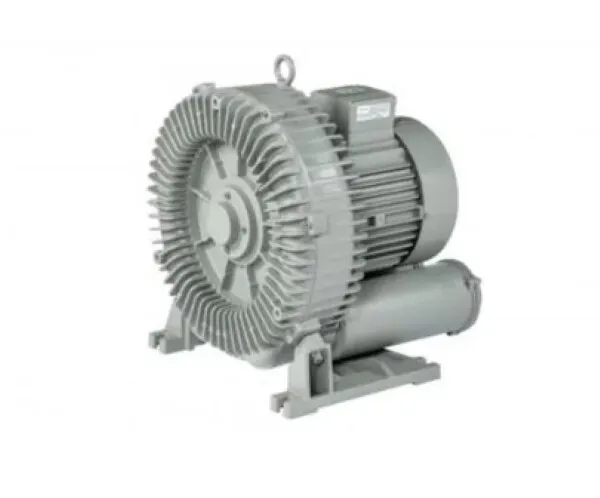
 | Ring Blower Sys Enterprises presents high-performance Ring Blowers designed for continuous, non-pulsating airflow in demanding industrial applications. View product → |
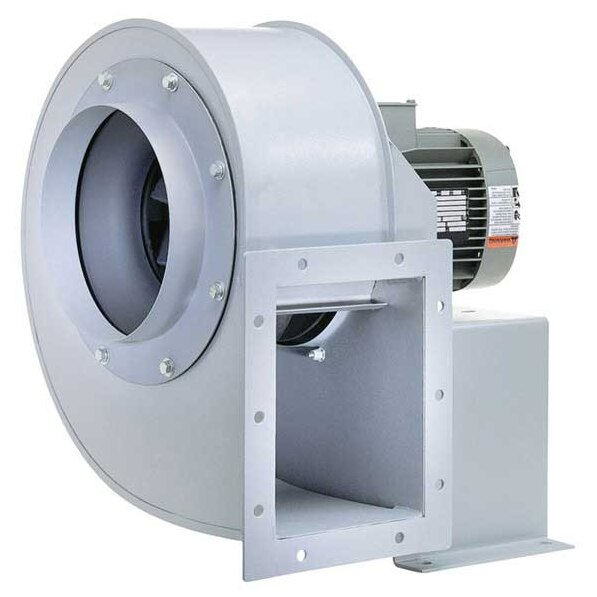 | Centrifugal blowers Sys Enterprises offers a robust range of Centrifugal Blowers in both Direct Drive and Belt Drive configurations, designed for high-pressure and... View product → |
Frequently asked questions
When does a ring blower fit an HVAC application?
Choose a ring blower for modest airflow with relatively high pressure or vacuum; use centrifugal or axial fans for whole-building supply and return air.
Which operating conditions affect ring blower selection?
Check required airflow, positive pressure or vacuum, air temperature, altitude, duty cycle, filtration, moisture, contaminants, and available electrical supply.
How do you calculate a ring blower HVAC duty point?
Add duct friction, fittings, filters, dampers, grilles, heat exchangers, and equipment losses at the required airflow, then select a blower whose curve meets that pressure.
What happens when an HVAC system is throttled or dirty?
A closed or restricted path changes airflow and pressure, while dirty filters increase resistance; use controls, relief protection, maintenance access, and the correct operating limits.
What should you compare in ring blower supplier offers?
Compare tested airflow-pressure curves, motor power, efficiency, noise, temperature range, materials, inlet filtration, controls, service parts, and warranty terms.
Related products
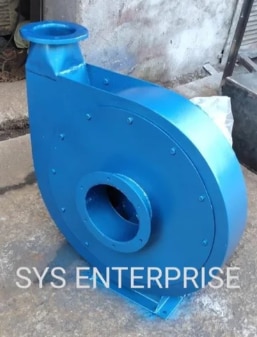 | Centrifugal blowers High Pressure Centrifugal Blower ₹11000 Manufacturer & Supplier We are a trusted manufacturer and supplier of High Pressure Centrifugal Blowers, engineered to deliver powerful airflow and... View product → |
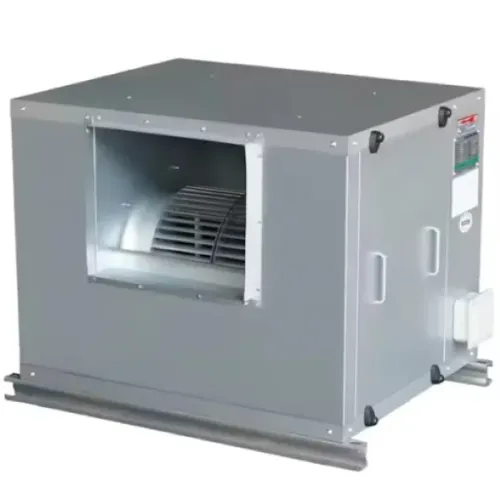
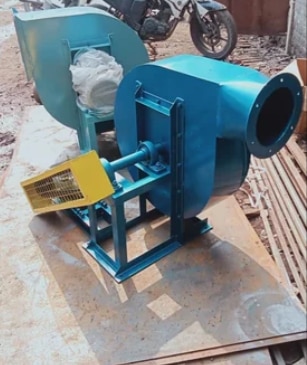 | Centrifugal blowers ₹25000 Manufacturer & Supplier We are a leading manufacturer and supplier of Belt Drive Centrifugal Blowers, designed to deliver reliable airflow, high... View product → |
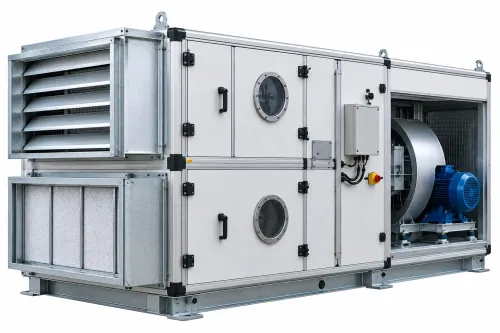
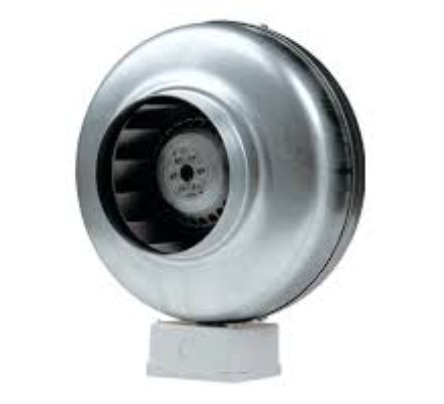 | Inline Fans Sys Enterprises offers compact and efficient Inline Fans designed for duct-mounted ventilation in commercial and industrial settings. View product → |
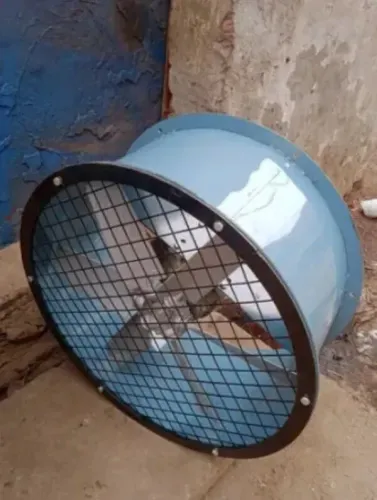
 | Axial Flow Fans ₹18000 Manufacturer & Supplier SYS ENTERPRISES is a leading manufacturer and supplier of Belt Drive Axial Flow Fans, designed to deliver high-volume airflow... View product → |
Keywords