

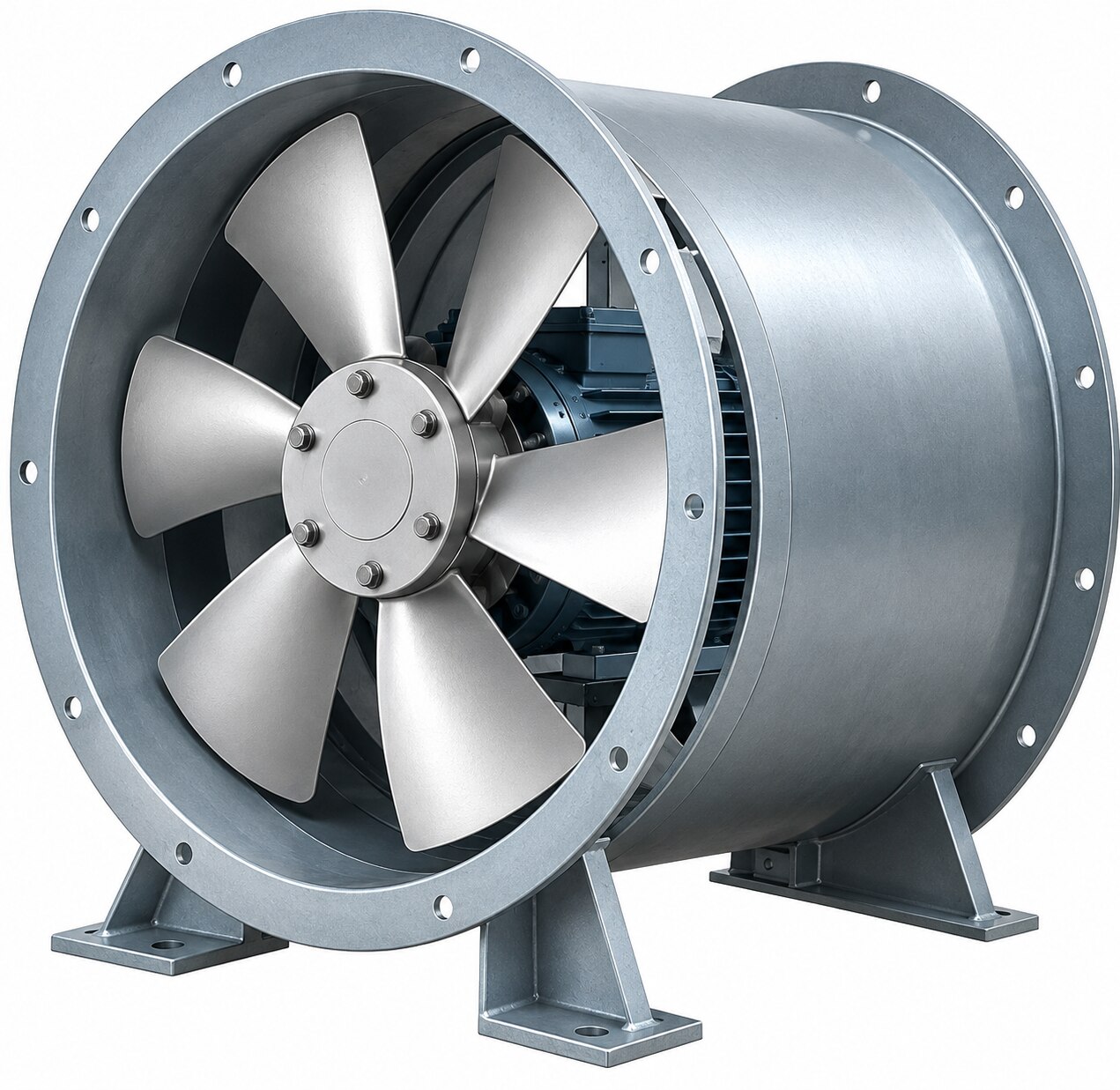
Air enters an axial fan along the shaft, gains energy from the rotating impeller, and leaves in the same general direction—but the delivered airflow depends on pressure resistance, inlet conditions and discharge design. By following the air path and reading the fan curve, you can distinguish a free-air rating from the airflow an installed fan will actually deliver.
Key takeaways
- Air enters parallel to the shaft and exits in the same general direction.
- Blade pitch, diameter and speed determine airflow and pressure performance.
- The operating point is where the fan curve meets the system resistance curve.
- Inspect blades, bearings, motor speed and obstructions when performance drops.
What Happens to Air Inside an Axial Fan
The motor supplies rotation; the impeller transfers that rotation into the air. Air enters an axial fan substantially parallel to the shaft, crosses the rotating blade row, and leaves in the same general direction through the discharge.
- The motor turns the shaft at the required speed. A speed increase raises airflow roughly in proportion to speed, pressure in proportion to speed squared, and power demand in proportion to speed cubed.
- The shaft transmits torque to the hub, the central rotating body that supports the blades.
- The blades accelerate the incoming air and change its momentum. They add axial velocity for through-flow and tangential velocity that leaves the rotor as discharge swirl.
- The casing or shroud stays stationary around the rotor. It contains the pressure rise, limits air from spilling around the blade tips, and guides the moving stream toward the outlet.
- At discharge, stationary guide vanes can remove part of the swirl and convert it into useful static pressure. Without that recovery, some rotor energy remains as rotating air and turbulence.
That sequence defines axial fan operation. The casing also provides the inlet and outlet alignment, so distorted entry or excessive tip clearance can reduce performance and create noise. A fan that still spins can have poor industrial axial fan working if blade stall causes separated flow, vibration, pressure fluctuations, and falling airflow.
How Blade Geometry and Fan Type Change Airflow
Blade geometry determines whether axial fan airflow arrives as useful volume, pressure, or wasted swirl. The main trade-offs are these:
- Blade pitch: A larger angle loads each blade more heavily, increasing pressure and airflow until stall begins. It also raises torque, noise and motor power; adjustable-pitch blades change capacity without changing motor speed.
- Diameter: A larger rotor sweeps more area, so it can move more air at lower speed. That reduces tip noise and power demand for the same duty, but requires more casing space and structural clearance.
- Speed: For similar fans, doubling speed approximately doubles airflow, quadruples pressure and increases power eightfold. A small speed increase can therefore overload the motor.
- Blade count: More blades add loading and pressure capability, but increase blockage, surface friction, noise and power. Fewer blades pass more air per blade and suit high-flow, low-pressure service.
- Tip clearance: The gap allows high-pressure air to leak back toward the low-pressure side. Excessive clearance cuts pressure and efficiency, raises noise and becomes worse with casing distortion, bearing wear or deposits.
- Guide vanes: Stators remove discharge swirl and recover tangential velocity as static pressure. They improve flow straightening, but add blockage, surface friction and pressure loss if poorly sized or damaged.
| Fan type | Airflow and pressure character | Typical consequence |
|---|---|---|
| Propeller | High airflow, low pressure | Efficient in open or lightly resisted systems |
| Tube-axial | High airflow in a cylindrical casing | Better containment and duct connection |
| Vane-axial | Higher pressure with straighter discharge | More recovery hardware, blockage and cost |
Distorted inlet flow or excessive resistance can push any rotor into stall, causing fluctuating pressure, vibration, noise and cyclic blade loads even while it continues rotating.
How to Read the Fan Curve and Find the Operating Point
A fan rated for high airflow delivers less once connected because filters, dampers, coils, grilles and ducts consume pressure. The operating point settles where the fan pressure–airflow curve intersects the connected system-resistance curve, not at the fan’s headline airflow rating.
1. Find the fan curve for the exact diameter, blade pitch, rotational speed and air density. Read airflow on the horizontal axis and pressure on the vertical axis; do not substitute a curve for a similar-looking model.
2. Add the pressure losses from every connected component. Include duct friction, elbows, transitions, inlet screens, filters, coils, dampers, grilles and discharge conditions. A dirty filter or partly closed damper moves the system curve upward and shifts the operating point toward lower axial fan airflow.
3. Confirm what the pressure curve means. Static pressure, total pressure and pressure rise across defined measurement planes are different quantities. Comparing fan total pressure with the static pressure needed to overcome a scrubber or duct system can produce a serious selection error.
4. Plot the fan curve against the system curve. Their intersection gives predicted airflow and pressure. If you increase speed, airflow rises roughly in proportion to speed, but pressure rises with speed squared and power with speed cubed; a small speed increase can overload the motor.
5. Verify the result using the specified traverse location and straightening distance from the applicable fan-test standard. Swirl and uneven velocity after the rotor can make a single convenient reading falsely suggest acceptable axial fan operation. A point near the discharge is not a complete measurement.
How to Match an Axial Fan to an Industrial Duty
Specify the duty at actual operating conditions, not a catalogue airflow. State the required volume flow, allowable tolerance, and system resistance, including ducts, filters, dampers, grilles, coils, scrubbers and discharge losses.
Identify whether pressure means static pressure, total pressure or pressure rise between named measurement planes; confusing total pressure with available static pressure causes undersized systems.
Give the manufacturer this checklist:
- Gas: air composition, temperature range, density, humidity, dust loading, droplets, corrosive chemicals and any combustible or toxic constituents.
- Installation: indoor or outdoor location, mounting orientation, available diameter and length, inlet and outlet straight-run, duct size, screens, guards, flexible connectors, isolation mounts and access for cleaning.
- Performance: operating flow and pressure at minimum, normal and maximum conditions, plus acceptable noise and vibration limits.
- Electrical: supply voltage, phase, frequency, motor starting method, hazardous-area classification, enclosure rating, speed control and whether a variable-frequency drive will be used.
- Controls: damper position, interlocks, overload protection and the signal used to prove airflow.
| Type | Selection signal | Main risk |
|---|---|---|
| Propeller | High flow, low resistance, open or short duct path | Loses capacity quickly as resistance rises |
| Tube-axial | Axial flow through a cylindrical casing | Duct transitions and inlet distortion reduce performance |
| Vane-axial | Higher pressure or straighter discharge flow | Vanes add blockage, cost and cleaning points |
| Variable-pitch | Frequent capacity changes | Incorrect pitch or speed can overload the motor |
Sys Enterprises can use this duty sheet to distinguish a suitable fan from one that only matches the airflow number. The industrial axial fan working point must still be checked where the fan and system curves intersect.
Related products
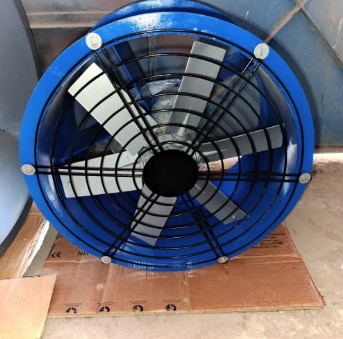 | Axial Flow Fans ₹10000 Industrial Axial Fan Manufacturer & Supplier We are a leading manufacturer and supplier of Industrial Axial Fans, designed to provide efficient air... View product → |
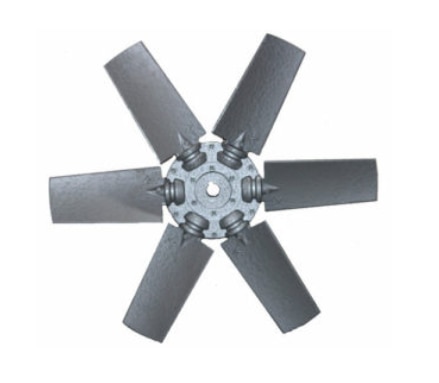 | Impeller Our Axial Fan Blades are engineered for maximum airflow efficiency and durability in industrial and commercial ventilation systems. View product → |
What to Inspect When Axial Fan Performance Changes
Inspect the airflow path, fan condition, operating data, and measurement setup before changing speed or blade pitch. This sequence separates a real axial fan operation problem from a blocked system or a false reading.
- Check inlet screens, filters, dampers, louvers, flexible connectors, casing, and discharge duct for blockage, collapse, damage, or a changed position. Added resistance can move the operating point into stall, causing fluctuating airflow, harsh noise, vibration, and cyclic loads even while the rotor spins.
- Examine every blade and the hub for fouling, erosion, corrosion, cracks, loose fasteners, and pitch mismatch. Deposits or one damaged blade can create imbalance and fatigue loads while average airflow still looks normal.
- Verify tip clearance, shaft and bearing condition, guards, isolation mounts, and motor alignment. Trend vibration, bearing temperature, motor current, speed, pressure, and delivered airflow; compare each value with earlier readings rather than judging noise alone.
- Treat sudden broadband noise, pulsating pressure, or shaking as a possible stall signal. Reduce system resistance or speed under controlled conditions, then confirm that the fan returns to a stable region; modest speed increases can raise power demand sharply because power follows approximately the cube of speed.
- Repeat airflow tests using the specified traverse locations and straightening requirements in the applicable fan-test standard. A single point reading downstream of an axial rotor can be misleading because swirl and uneven velocity persist.
- Identify whether the pressure reading is static pressure, total pressure, or pressure rise across defined planes. Confusing these values can make a healthy fan appear underperforming.
This disciplined axial fan maintenance record shows whether the fault lies in the fan, the connected system, or the test itself.
Frequently asked questions
How does air move through an axial fan?
The motor rotates the impeller, and the blades transfer energy to air entering substantially parallel to the shaft. Air then leaves through the discharge in the same general direction.
How do blade geometry and fan type affect axial airflow?
Blade pitch, chord, diameter, blade count and rotational speed change the volume flow, pressure rise, noise and power demand. Tube-axial, vane-axial and propeller fans suit different resistance and flow requirements.
What is the operating point on an axial fan curve?
The operating point is where the fan performance curve intersects the system resistance curve. It identifies the actual airflow and pressure produced in the installed system.
How do you match an axial fan to an industrial duty?
Define the required airflow, static pressure, temperature, gas composition, installation arrangement, duty cycle and motor power before comparing fan selections.
What should you inspect when axial fan performance changes?
Check inlet and discharge obstructions, blade fouling or damage, blade pitch, belt or coupling condition, bearing condition, motor speed, rotation direction and abnormal vibration.
Related products
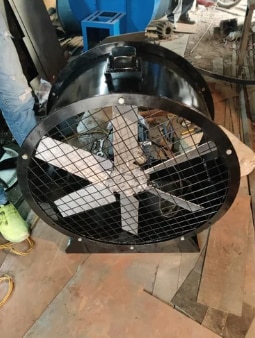 | Axial Flow Fans ₹14000 High-Performance Vane Axial Fan Manufacturer & Supplier We are a leading manufacturer and supplier of Vane Axial Fans designed for high-volume... View product → |
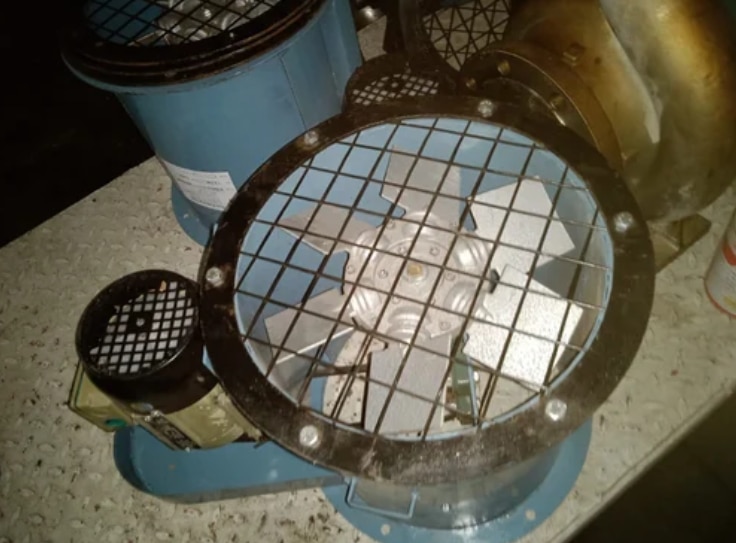 | Axial Flow Fans ₹18000 Manufacturer & Supplier SYS ENTERPRISES is a leading manufacturer and supplier of Belt Drive Axial Flow Fans, designed to deliver high-volume airflow... View product → |
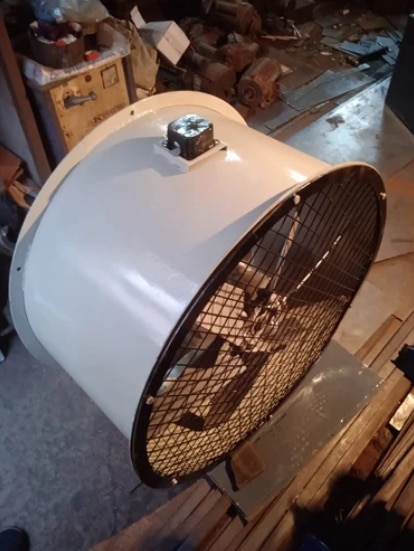 | Axial Flow Fans ₹14000 Premium MS Axial Flow Fans Manufacturer & Supplier We are a leading manufacturer and supplier of MS Axial Flow Fans designed to deliver powerful... View product → |
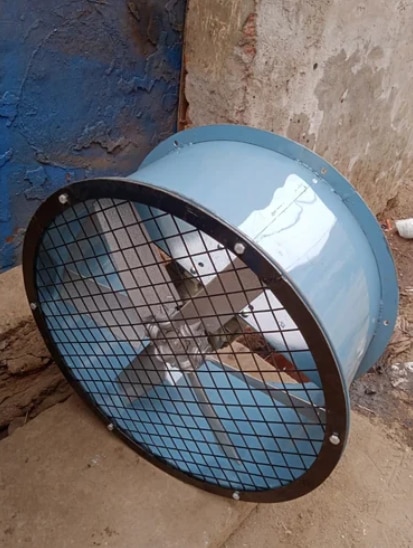 | Axial Flow Fans Industrial Tube Axial Exhaust Fans ₹14000 Industrial Tube Axial Exhaust Fan Manufacturer & Supplier We are a trusted manufacturer and supplier of Industrial Tube Axial Exhaust Fans, offering... View product → |