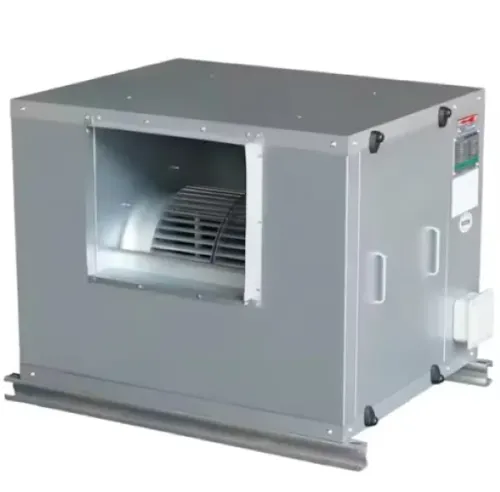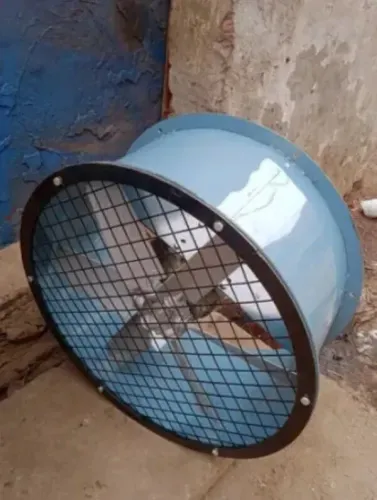
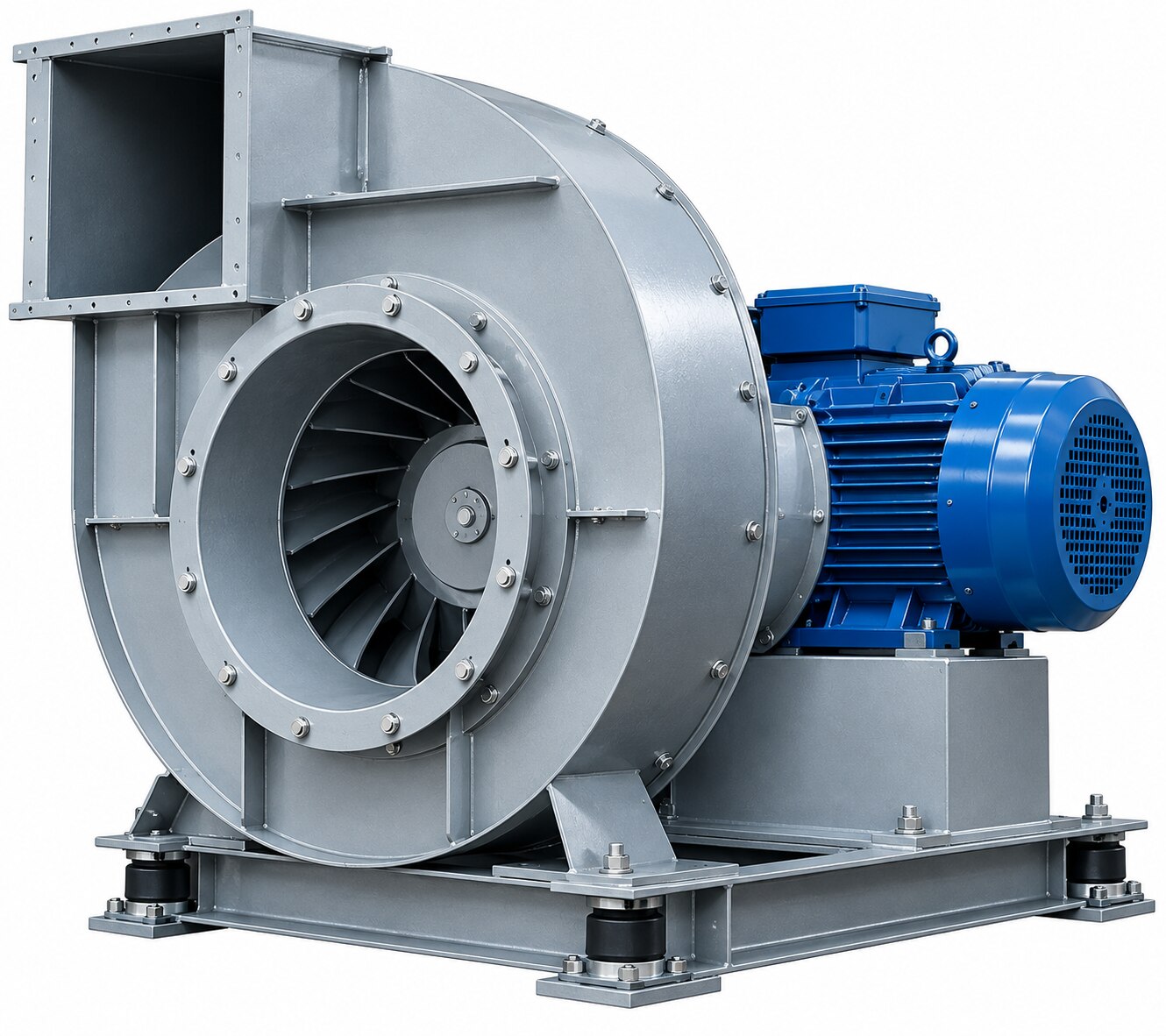
Low airflow, rising static pressure, vibration, overheating and motor trips can come from the blower, the drive or the duct system. You will be able to isolate the fault, calculate the effect of speed changes and decide whether direct drive solves the problem or simply changes the equipment involved.
Key takeaways
- Isolate power, verify zero energy, and keep guards fitted before inspection.
- Compare measured airflow and pressure with the fan curve and operating point.
- Inspect dampers, filters, duct leaks, rotation, and system-effect losses before changing speed.
- Choose direct drive when belt faults, alignment, or maintenance access drive recurring failures.
Where to start when a centrifugal blower loses airflow
Start with safe isolation and an ordered field check; this separates centrifugal blower problems from electrical, mechanical, and duct-system faults. Apply lockout/tagout, verify zero energy, and keep guards in place before inspection. Do not reach through an access panel while the wheel can move.
- Confirm rotation direction against the arrow on the housing. Reverse rotation can leave the wheel turning at full speed while producing poor airflow.
- Check the electrical supply, motor current, and actual RPM. A tripped phase, incorrect voltage, or slipping drive cannot be diagnosed from airflow alone.
- Inspect filters and screens for loading, then verify every damper is open and correctly positioned.
- Examine the impeller for fouling, damage, looseness, or rubbing. Record abnormal vibration, bearing noise, and motor temperature.
- Inspect the duct route for leaks, crushed sections, blocked transitions, and obstructions near the inlet or discharge.
- Look for an elbow, abrupt transition, or damper too close to the blower. That system effect creates swirl and uneven velocity, reducing airflow while increasing noise or power.
- Measure airflow, static or total pressure, RPM, electrical power, and gas temperature. Compare those readings with the fan curve at the actual operating point, not with catalog CFM alone.
If rotation and speed are correct but pressure is higher than the selection point, the connected system is resisting the blower. If pressure is normal but power, vibration, or temperature is abnormal, investigate the motor, wheel, bearings, or electrical supply before changing speed.
This centrifugal blower troubleshooting sequence prevents a duct fault from being mistaken for a failed blower.
Use the operating point and fan laws before changing speed
The operating point—not the nameplate CFM—shows why airflow is poor. Measure airflow, static or total pressure, RPM, electrical power, and gas temperature or density at the same time.
Catalog airflow applies at a specified pressure and test condition; matching that number alone can wrongly blame the blower for a blocked filter, closed damper, leak, or excessive duct resistance.
- Plot the measured airflow and pressure against the fan curve. Low airflow with higher-than-expected pressure indicates system resistance. Low airflow and low pressure points to incorrect rotation, a dirty or damaged wheel, inadequate speed, or a measurement error.
- Compare RPM with the design value. If speed is low while power is normal or low, check the drive, controls, and motor limits before touching the ductwork. If RPM is correct but power is high, suspect excessive density, wheel fouling, overload, or operation beyond the intended curve.
- Apply the fan laws only with the same wheel, comparable operating regime, and approximately constant air density: Q₂/Q₁ = N₂/N₁, Δp₂/Δp₁ = (N₂/N₁)², and P₂/P₁ = (N₂/N₁)³. A 10% speed increase gives about 10% more airflow, 21% more pressure, and 33% more power.
- Reduce speed only after confirming the system still receives its required pressure. Increasing speed can overload the motor or exceed wheel, bearing, vibration, or drive limits; reducing it can move the operating point into inadequate airflow or stall.
This is the basis of centrifugal blower troubleshooting and the proper evaluation of direct drive blowers for centrifugal blower problems. A VFD or electronically commutated motor still needs its permitted speed range and cooling limits verified.
Which centrifugal blower problems direct drive actually removes
Direct drive removes belt-transmission failures, not centrifugal blower failures as a whole. The useful case for direct drive blowers for centrifugal blower problems is eliminating the belt, pulleys and their adjustment; it does not repair a restricted duct or a damaged wheel.
| Failure or condition | Direct-drive result | What still needs checking |
|---|---|---|
| Belt slip, stretch, wear or breakage | Removed | Motor, wheel and bearings |
| Pulley misalignment, belt dust and pulley losses | Removed | Wheel imbalance and fouling |
| Low airflow from a blocked filter, closed damper or undersized duct | Unchanged | Airflow, static pressure and system resistance |
| Excessive vibration or bearing heat | Unchanged | Wheel balance, bearing condition and alignment |
| Motor overload or overheating | Unchanged | Motor horsepower, electrical current and gas temperature |
| Wrong rotation, surge, stall or excessive noise | Unchanged | Rotation, fan curve and inlet conditions |
A direct-drive centrifugal blower still operates at a speed, pressure and airflow determined by the system. With a VFD or electronically commutated motor, do not reduce speed below the motor’s cooling limit or exceed wheel RPM, drive, bearing and vibration limits.
Pressure falls approximately with speed squared, so slowing the wheel to cut noise can remove the pressure needed to maintain airflow.
Check the actual operating point using airflow, static or total pressure, RPM, electrical power and gas temperature or density. A hot, corrosive or contaminated airstream can also require an externally mounted motor; direct drive does not make that exposure safe.
Find installation and system-effect faults that imitate blower failure
A correctly selected centrifugal blower can deliver low airflow or excessive noise when the connected system creates more resistance than the selection assumed. The wheel may turn at the correct RPM while an inlet restriction, poor duct geometry or unexpected leakage moves its operating point away from the design condition.
Check these installation faults:
- A loaded filter, screen or inlet guard starves the wheel. The resulting turbulence can whistle and increase static pressure.
- An elbow installed against the inlet, or an abrupt outlet transition, creates swirl and a nonuniform velocity profile. The blower then loses usable pressure and may become noisy.
- A partly closed, misplaced or incorrectly sized damper adds resistance. Opening it can increase airflow but also raise motor power, so check the fan curve.
- Leaking flexible connections, access doors or duct joints bleed air before it reaches the process. A leak near the blower can also produce a hiss.
- An undersized duct or obstructed transition raises system resistance even when the blower itself is sound.
Unstable operation points to surge or stall rather than immediate wheel failure. Airflow and pressure may pulse, with rumbling, vibration or cyclic noise as the fan crosses an unstable part of its curve. During centrifugal blower troubleshooting, measure airflow, pressure and RPM at the installed system, then inspect the whole path.
Direct drive removes belt faults; it does not remove system-effect losses.
Check whether a direct-drive blower fits the installation
Choose direct drive only when the required wheel speed, gas condition and motor location suit the installation; otherwise, a belt drive may be the safer retrofit.
| Check | Direct drive | Belt drive |
|---|---|---|
| Speed and curve | Fixed motor speed; match the fan curve to the measured airflow and static pressure | Pulley changes provide speed adjustment, within wheel and motor limits |
| Motor and temperature | Motor must tolerate the gas temperature and environment | Motor can sit outside hot, corrosive or contaminated airflow |
| Efficiency | Removes belt slip and belt losses, but drive and motor efficiency still matter | Adds belt losses but can place the blower at a better operating point |
| Maintenance | No belt tensioning, alignment or replacement | Requires inspection of belts, pulleys, guards, bearings and alignment |
| Retrofit risk | Check wheel tip speed, shaft loads, bearings, dimensions and access | Existing arrangement may already provide the required speed reduction |
Before ordering direct drive centrifugal blowers, verify:
- The manufacturer’s fan curve reaches your actual duty point without pushing the wheel beyond its rated RPM.
- Motor horsepower, full-load current, enclosure or insulation class, and variable-frequency-drive compatibility match the load.
- Inlet and outlet dimensions, rotation, mounting holes, service clearance and guard access fit the existing system.
- Temperature, dust, corrosive vapour and moisture do not exceed motor, bearing or wheel limits.
- The motor can be removed without dismantling ductwork.
Sys Enterprises can use these checks to distinguish suitable direct drive blower applications from cases needing an externally mounted motor or belt arrangement. Treat direct drive blowers for centrifugal blower problems as a targeted remedy for belt faults, not a cure for blocked filters, poor inlet flow, imbalance or excessive system resistance.
Related products
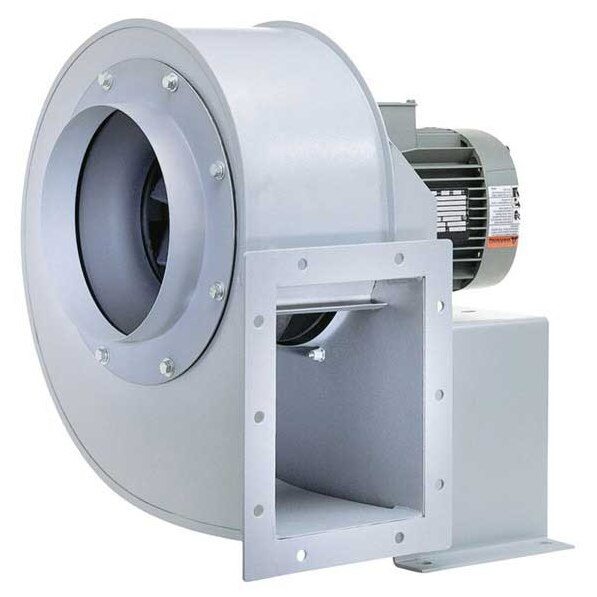 | Centrifugal blowers Sys Enterprises offers a robust range of Centrifugal Blowers in both Direct Drive and Belt Drive configurations, designed for high-pressure and... View product → |
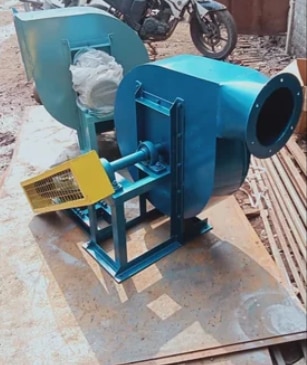 | Centrifugal blowers ₹25000 Manufacturer & Supplier We are a leading manufacturer and supplier of Belt Drive Centrifugal Blowers, designed to deliver reliable airflow, high... View product → |
Frequently asked questions
Where should you start when a centrifugal blower loses airflow?
Apply lockout/tagout, verify zero energy, keep guards in place, and check electrical supply, rotation, wheel condition, filters, dampers, and ductwork in order.
How do fan laws help troubleshoot centrifugal blower problems?
Use the fan curve and measured operating point first. Fan laws estimate how airflow, pressure, and power change with speed, but they do not correct a restricted system.
Which centrifugal blower problems does direct drive remove?
Direct drive removes belts, sheaves, belt slip, belt tension errors, pulley misalignment, and belt replacement. It does not remove blocked filters, closed dampers, duct leaks, or undersized ductwork.
What installation faults can imitate blower failure?
Look for wrong wheel rotation, inlet obstructions, abrupt elbows, poor inlet conditions, leaking ducts, dirty filters, closed dampers, and outlet restrictions that increase system resistance.
When does a direct-drive centrifugal blower fit an installation?
Check required airflow, static pressure, speed control, motor power, temperature, maintenance access, noise, space, and the manufacturer’s fan curve before selecting a direct-drive unit.
Related products
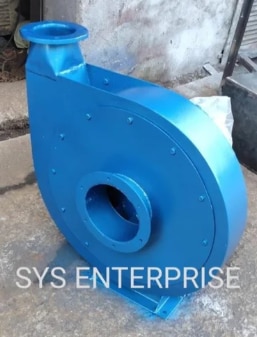 | Centrifugal blowers High Pressure Centrifugal Blower ₹11000 Manufacturer & Supplier We are a trusted manufacturer and supplier of High Pressure Centrifugal Blowers, engineered to deliver powerful airflow and... View product → |
 | Centrifugal blowers ₹19000 Manufacturer & Supplier We are a leading manufacturer and supplier of Induced Draft (ID) Fans, designed to efficiently extract flue gases, smoke,... View product → |
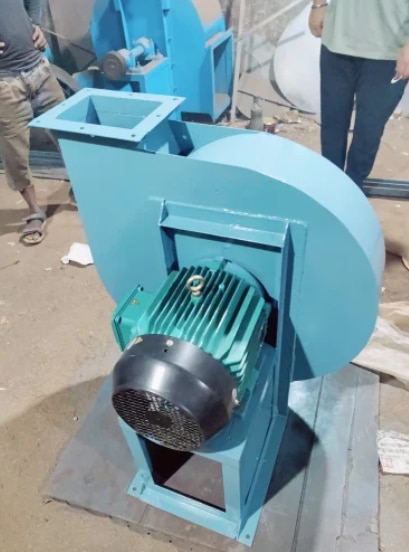 | Centrifugal blowers ₹20000 Manufacturer & Supplier We are a leading manufacturer and supplier of Boiler Forced Draft (FD) Fans, engineered to supply a continuous flow of... View product → |
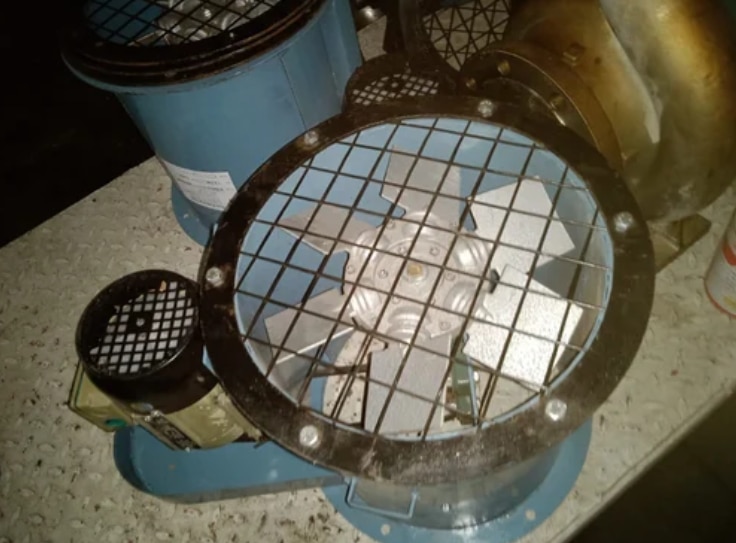 | Axial Flow Fans ₹18000 Manufacturer & Supplier SYS ENTERPRISES is a leading manufacturer and supplier of Belt Drive Axial Flow Fans, designed to deliver high-volume airflow... View product → |
Keywords